What Actually Drives Product Market Success?
by Nichole Rouillac
Founder + Creative Director, level
People often ask me what makes a product successful in the market.
After working on products like Tempo, Nex, and AliveCor, I’ve seen a clear pattern. The products that truly succeed are built on one thing first:
Deep trust.
Trust at the leadership level. Trust in the creative vision. Trust that design decisions matter. And trust that we’ll stay in it together when things get hard.
Across these companies, level was brought in early, when there were more questions than answers. Rough prototypes. Big ambition. Real uncertainty.
That early stage is intense. It’s creative. It’s exploratory. It’s sometimes messy. I often describe those first presentations as a bit like dating. We’re figuring each other out. Understanding taste. Testing instincts. Having real dialogue about what the brand stands for and how that should show up physically in hardware.
For Nex, we pushed toward something joyful and nostalgic. Energetic. Playful. A little reminiscent of a Rubik’s Cube. We wanted it to spark curiosity from across the room and invite movement.
For Tempo, we explored how to make a piece of fitness equipment feel like furniture. Something refined and inviting enough to live proudly in the home instead of hiding in the garage. It had to belong in the living room without screaming “tech.”
For AliveCor, precision and trust were everything. The design had to feel clinically credible, well-built, and worthy of detecting life-saving health insights.
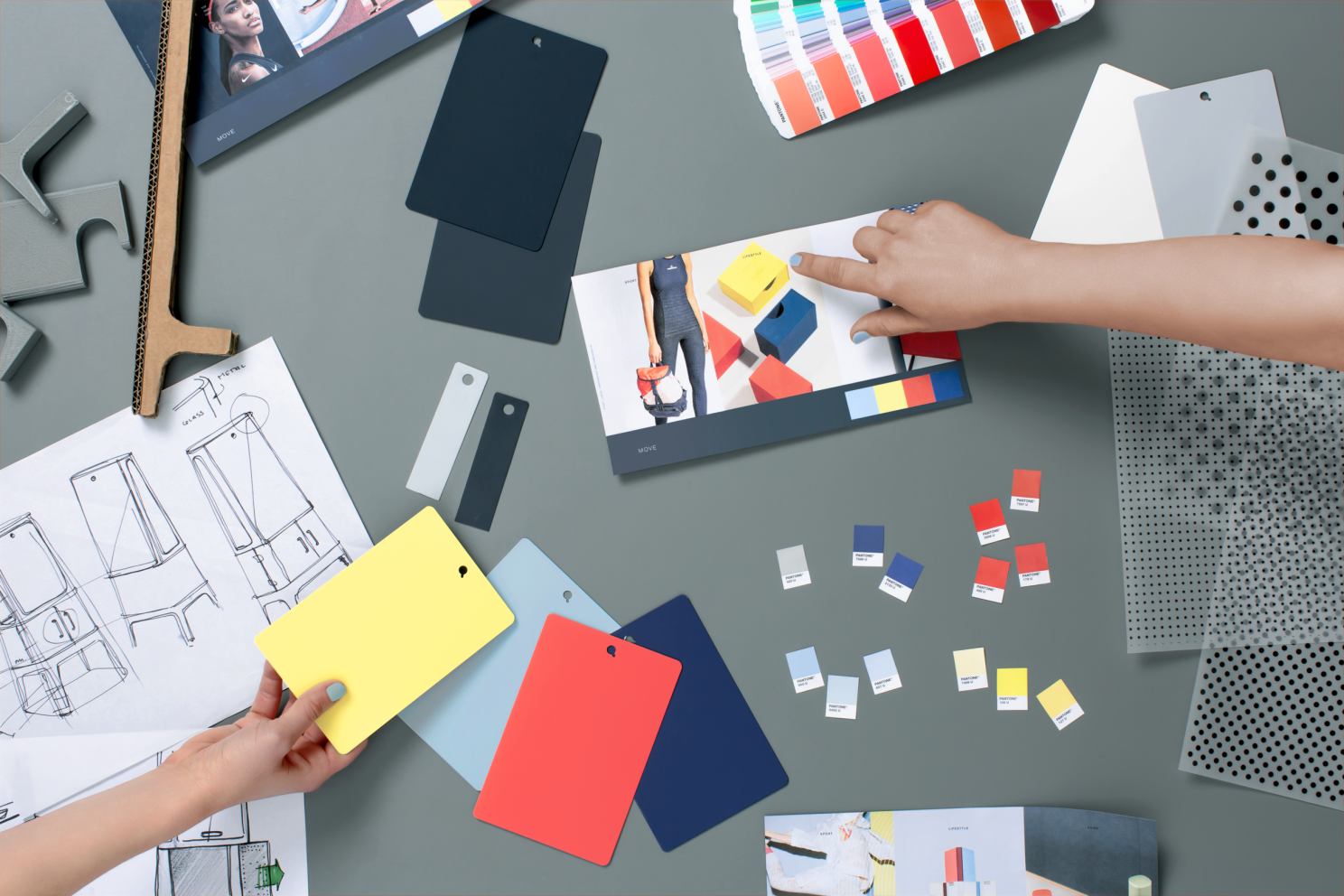
Color, material and finish exploration for Tempo Studio
Those early conversations aren’t just about form. They’re deeply rooted in material decisions. Color. Texture. Finish. The way light hits a surface. The way a metal edge feels against your hand.
Color, material, and finish drive emotion.
It’s what makes someone notice a product from across the room. What makes them walk toward it. What makes them want to pick it up, hold it, and imagine it in their life.
But those material decisions are never just aesthetic. From day one, we’re thinking about how those parts and finishes will be manufactured. What process supports the brand where they’re at. What is realistic within the client’s budget. What scales. What holds up over time.
Creative vision and manufacturing thinking happen in parallel. Not sequentially.
That only works when there’s trust.
Creativity Alone Isn’t Enough
Hardware development is a constant exercise in trade-offs. Cost. Timeline. Manufacturability. Performance. Experience.
When leadership truly understands why a design is the way it is, they are far more likely to protect it when pressure mounts.
Great clients don’t treat design as decoration. They treat it as strategy.
They want creative vision. They want technical rigor. They want audience insight. And they want honest feedback.
They want a team who will say, “If we change this, here’s what we risk.” And they trust that perspective.
That’s when a consultancy stops feeling external and starts feeling embedded.
With Tempo, Nex, and AliveCor, we weren’t an outside agency handing off files. We were integrated. In executive meetings. On text threads. Traveling to contract manufacturers. Sitting through DVT and PVT builds. Solving problems in real time.
With Nex, our Principal Designer spent weeks on-site during production validation. Not because we had to. Because we believed in protecting the product.
That level of involvement only happens inside a real relationship.
As Jorge Fino, VP of Design at Nex, shared:
“When we first began looking for industrial design agencies, I was struck by level's execution quality and diverse perspective, which aligned perfectly with our ethos and with Nex's target demographic. We chose level because they demonstrated an understanding of how much is at stake for companies at our stage.”
That understanding is everything.
Where Relationships Are Truly Tested
The Design for Manufacturing (DFM) phase is where many products quietly lose their edge.
Tooling constraints appear. Costs tighten. Timelines compress. The easy path starts to look appealing.
This is not where strong relationships weaken. This is where they deepen.
Because now, every decision has weight.
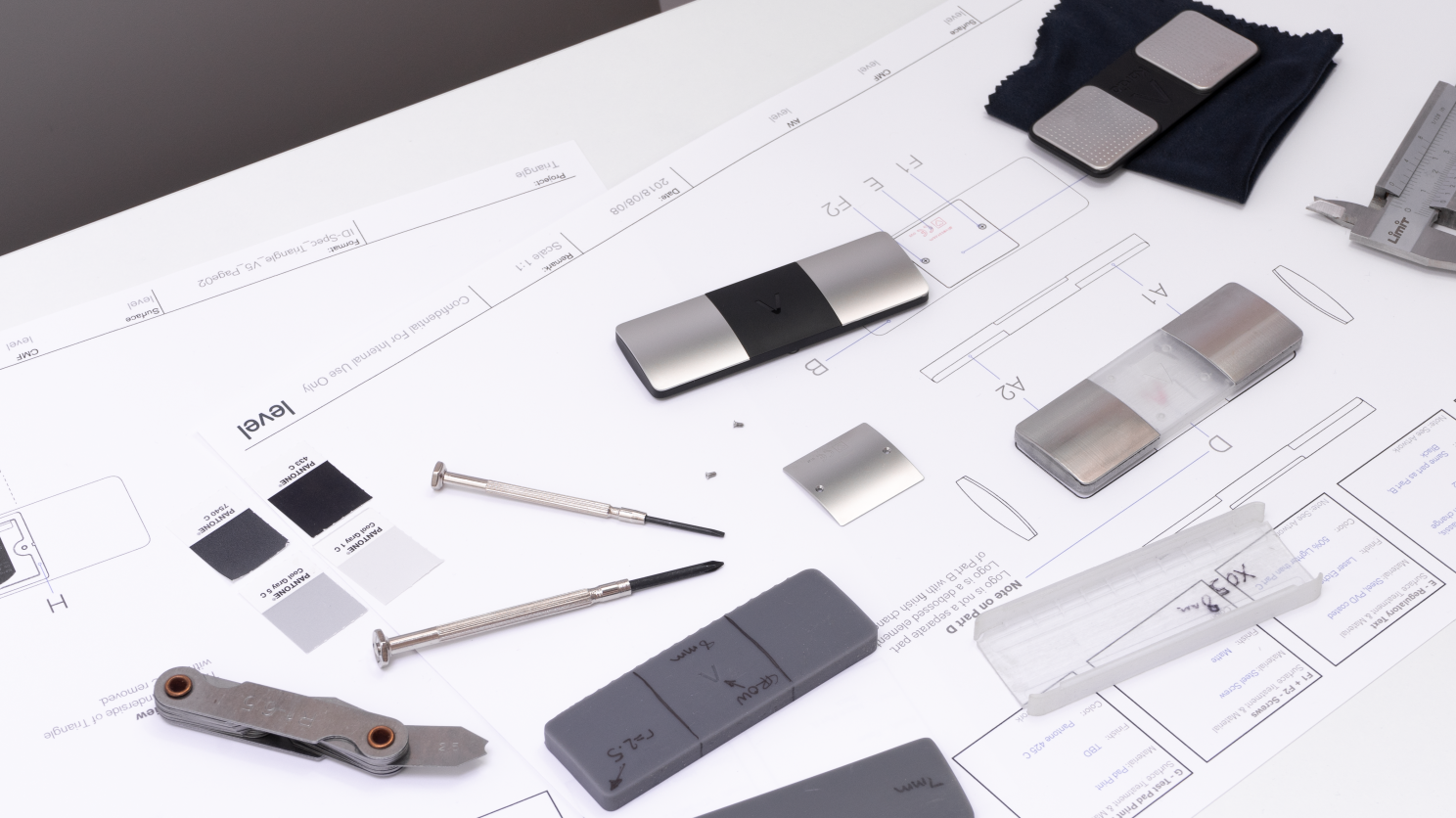
AliveCor worked closely with level through Design for Manufacturing (DFM)
The best clients stay engaged here. They don’t disappear. They don’t default to the cheapest solution. They make trade-offs intentionally, together.
Yes, compromises happen. They always do. But the difference is whether they’re accidental or deliberate.
When trust exists, the original intent survives.
That’s why the final products for Tempo, Nex, and AliveCor stayed remarkably close to their early vision. The fit, finish, materials, and details feel considered because someone fought for them.
As Jorge also shared:
“Throughout the entire design process, what I appreciated most was level’s willingness and commitment to push boundaries as if they were a part of our team.”
We felt like part of the team. Because we were treated like it.
And It Shows Up in the User’s Hands
This is the part that matters most.
When someone unboxes a product and their eyes light up. When a family jumps around the living room together. When someone trusts a device that catches a life-threatening condition early. When a product feels so well made it becomes part of daily life.
That feeling doesn’t happen by accident.
It happens because design was protected. Because materials were chosen intentionally. Because creative vision wasn’t diluted. Because teams stayed aligned through the hardest parts of production.
Product success isn’t just about valuation milestones or unit sales. It’s about real human impact.
Healthier lives. More movement. Shared joy. Earlier diagnoses.
That’s what makes the work meaningful.
The Real Differentiator
Great products aren’t built in a handoff model.
They’re built through trust. Through creative intensity. Through material decisions that carry emotion. Through honest dialogue. Through leadership alignment. And through relationships strong enough to survive the manufacturing floor.
The best clients don’t just hire designers.
They build with them.
And that’s what makes lasting market success possible.
